Turning a Vague Feature Request into a Testable Requirement
What does “let users change a delivery option” really mean? A practical look at the decisions hidden inside feature requests—and how to make those decisions testable.
On this page
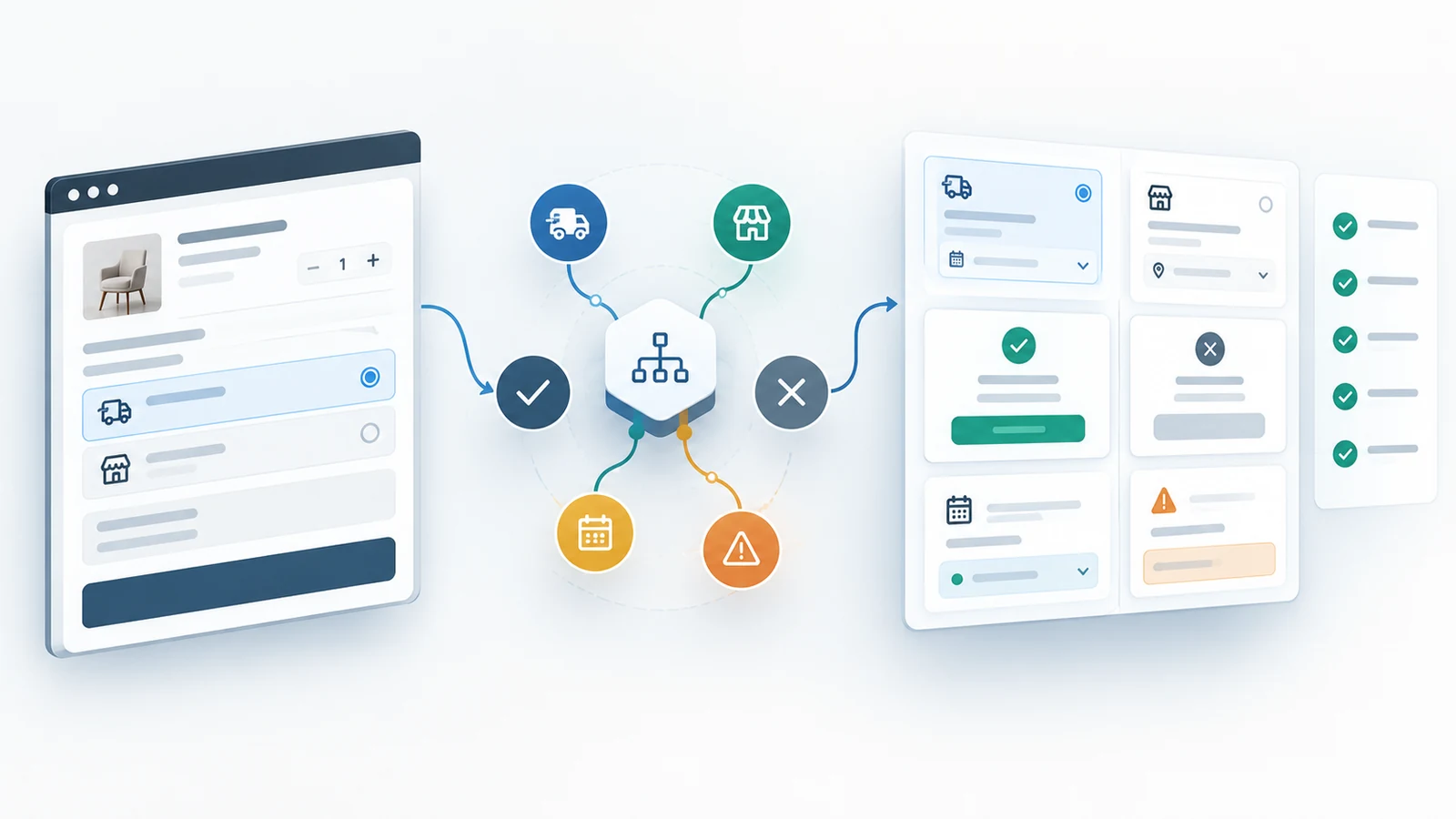
One lesson from working on established e-commerce interfaces is that a request can be visually clear while its behavior remains undecided.
Consider a simple request: “Let customers change the delivery method in the cart.” A designer can draw a selector. A developer can make it open and close. Both can follow the request and still build the wrong experience, because the sentence does not say when a change takes effect, what makes an option available, or what happens if the change fails.
The example in this article is illustrative. It does not reproduce a particular client’s ticket, internal implementation, or release outcome. Its purpose is to show how a proposed interface becomes an agreement about behavior that a product owner, designer, engineer, and tester can evaluate in the same way.
A request describes an intention, not a complete behavior
“Let customers change delivery method” is a reasonable starting point. It identifies an ability the product should provide. But it does not specify what a successful change means.
Does selecting “store pickup” immediately replace home delivery? Does the shopper first have to choose an eligible store? When do delivery charges change? If an item is not eligible for pickup, can the shopper proceed with the rest of the cart? If they close the selector, does the previous choice remain active? And if the server rejects the change, which method should the cart display?
These are not simply technical edge cases. Some are product rules about cost, availability, and commitment. Others are decisions about the interaction model. An engineer can implement several plausible answers; the task is to identify which answer the product actually intends.
This is where requirements analysis becomes part of engineering work. It is not about turning every small ticket into a formal document. It is about recognizing when a brief instruction hides decisions that will affect what users see and what the business promises.
Make the hidden choices visible
A useful first step is to look for points where two competent people could interpret the request differently and produce different results. For our hypothetical delivery-selection feature, the following questions can materially change the implementation and the user’s experience.
| Unanswered question | Plausible alternatives | Consequence if left implicit |
|---|---|---|
| When does it take effect? | Immediately on selection / only after confirmation | Different expectations about the saved cart state |
| What makes pickup eligible? | Any store / only a store that supports this cart | Availability, inventory, and customer promises |
| When do totals change? | On tentative choice / after accepted recalculation | Prices and promotions may appear inconsistent |
| What happens on cancellation? | Keep the tentative choice / restore existing delivery | A cancelled action could change the order unexpectedly |
| What happens on failure? | Leave a partial change / preserve last valid choice | Recovery, trust, and consistent checkout state |
The answers cannot all be derived from a screenshot. A dropdown does not tell us whether it commits a change, whether an unavailable pickup option should be hidden or explained, or which system decides the new price. Those choices must be made intentionally.
The goal is not to collect every conceivable question. It is to find the ones that could lead to incompatible behavior, business consequences, or costly rework if resolved silently.
Agree on one behavior before making it testable
Suppose the product team chooses the following behavior for this illustrative feature. This is one valid policy, not a universal recommendation for every e-commerce website:
A shopper may change from home delivery to store pickup when the cart supports pickup at an eligible store. Choosing pickup opens a selection flow; the existing home-delivery choice remains active until the shopper selects a valid store and confirms. The cart applies the change only after it is accepted and the updated charges are available. Cancelling or receiving a rejection leaves the original delivery choice active and gives appropriate feedback.
This is much more useful than “add a dropdown,” because it settles when a change becomes real, what information is necessary, which state should survive cancellation, and how to handle an unsuccessful request. It still leaves room for engineers to choose appropriate component structure and implementation details.
Notice the distinction between a rule and its presentation. “Pickup requires an eligible store” is a product rule. “The store selection appears in a modal, dropdown, or separate view” is a design decision constrained by accessibility and usability. The two are related, but they are not interchangeable.
Write acceptance criteria around observable results
Once the intended behavior is agreed, acceptance examples can describe the starting condition, the shopper’s action, and the result someone should observe. The Given–When–Then structure documented by Cucumber is useful here, but it is not necessary to use a particular testing framework to think this way.
For the agreed hypothetical behavior above, these examples create a more precise review surface than a visual checklist:
| Starting situation | Action | Expected observable result |
|---|---|---|
| Home delivery active; eligible pickup store | Select store pickup, choose valid store, confirm | Pickup and store shown after cart accepts the change; charges updated |
| Pickup chosen, no store selected | Attempt to confirm | Change not applied; user is told to choose a store |
| Home delivery active; pickup selection open | Cancel or close without confirming | Home delivery and existing totals remain active |
| Valid store chosen; service rejects update | Confirm the change | Original method remains; error clearly explained |
| Pickup successfully confirmed | Return to cart later | Saved pickup method and store are still reflected |
| Cart ineligible for store pickup | Try to switch to pickup | Unavailable option explained; no silent item removal |
| Keyboard-only shopper | Navigate, choose, and confirm an eligible option | Controls operable and results or errors understandable |
Each expected result is about what the user or a connected system can observe. “Call a particular API method” would be an implementation detail, not sufficient acceptance evidence. “The cart shows the confirmed pickup location and correct updated charges after the server accepts the change” is closer to the product promise.
The failure examples are especially useful. Without them, a developer might optimistically update the delivery label even when the cart has rejected the change, while a tester might reasonably expect the previous method to remain. When required information is missing, the interface also needs to identify the problem clearly in text, consistent with W3C’s guidance on error identification. A test cannot resolve an unanswered product decision. It can only reveal that the decision was missing or that the implementation does not match it.
Once behavior is agreed, From Business Goal to Test Case: Building a Requirements Traceability Map shows how to connect it to business purpose and verification evidence.
Separate the decisions engineers can make from the ones they should not make silently
Engineering judgment includes knowing when a reasonable assumption is sufficient. Not every uncertainty deserves a meeting or an approval.
An engineer can often choose an internal component boundary, loading-state implementation, or keyboard-focus technique when established accessibility and design expectations already make the intended result clear. Such decisions can be reviewed through the normal engineering process.
Other questions change the product’s promise. Whether pickup is available for a mixed cart, whether delivery charges apply during an incomplete selection, or whether a changed method alters a promotion may affect money, inventory, or customer expectations. Those decisions need an authorized product or business answer and, where applicable, confirmation from the systems that enforce them.
A practical distinction is impact and reversibility. If an assumption is local, low consequence, easy to reverse, and consistent with an established pattern, the team may reasonably proceed. If it affects payment, eligibility, persisted data, analytics meaning, accessibility, or an expensive integration, the assumption should be made explicit and clarified before too much work depends on it.
Clarification is not a request to transfer all responsibility away from engineering. A strong question brings a recommendation, the available alternatives, and what changes under each one. “Should pickup commit immediately, or only after the shopper selects a store and confirms? The first is faster, but it creates an incomplete cart state unless we have a fallback” is more useful than “The requirement is unclear.”
Implementation can reveal new requirements
Even a well-discussed requirement will not predict every interaction with the existing system. The frontend may discover that the cart API treats shipping and pickup as separate configurations, that a selected store becomes unavailable, or that a discount depends on the delivery method. These are possibilities in the illustrative scenario, not claims about a specific project.
When new information changes the agreed behavior, the change should become visible to everyone who relies on that decision. Update the requirement or acceptance examples where the team actually works, confirm the decision with the appropriate owner, and adjust the implementation and tests together. Otherwise the ticket describes one behavior, the design suggests another, and the code quietly becomes the only record of what was decided.
This does not require freezing requirements before development starts. Building and testing often uncover details that cannot be known fully in advance. The important discipline is keeping the shared understanding current rather than pretending it was complete from day one.
How do we know the requirement is ready?
A useful readiness check is to ask whether another engineer and a tester could independently describe the same successful behavior and the same important failure outcomes. They should know what triggers the change, when it is confirmed, which conditions make it valid, what the user sees, and which business decisions still require an owner.
For a low-risk visual adjustment, that might take two sentences. For a cart behavior involving availability, prices, and persistence, it may require several acceptance examples and a small number of explicit decisions. The appropriate amount of detail follows the consequence of getting the behavior wrong—not the apparent size of the control.
The purpose is a shared decision, not a longer ticket
Turning a vague request into a testable requirement is not a writing exercise performed after the real work. It is part of deciding what the real work is.
The delivery example began with a plausible interface instruction. It became actionable only when the team could distinguish a tentative choice from a confirmed one, identify who decides availability and pricing, and agree on what happens when the change is cancelled or rejected. Acceptance examples then made that agreement observable.
Better requirements do not eliminate uncertainty. They prevent consequential product decisions from being made accidentally inside an implementation—and give the people building and evaluating a feature the same definition of success.
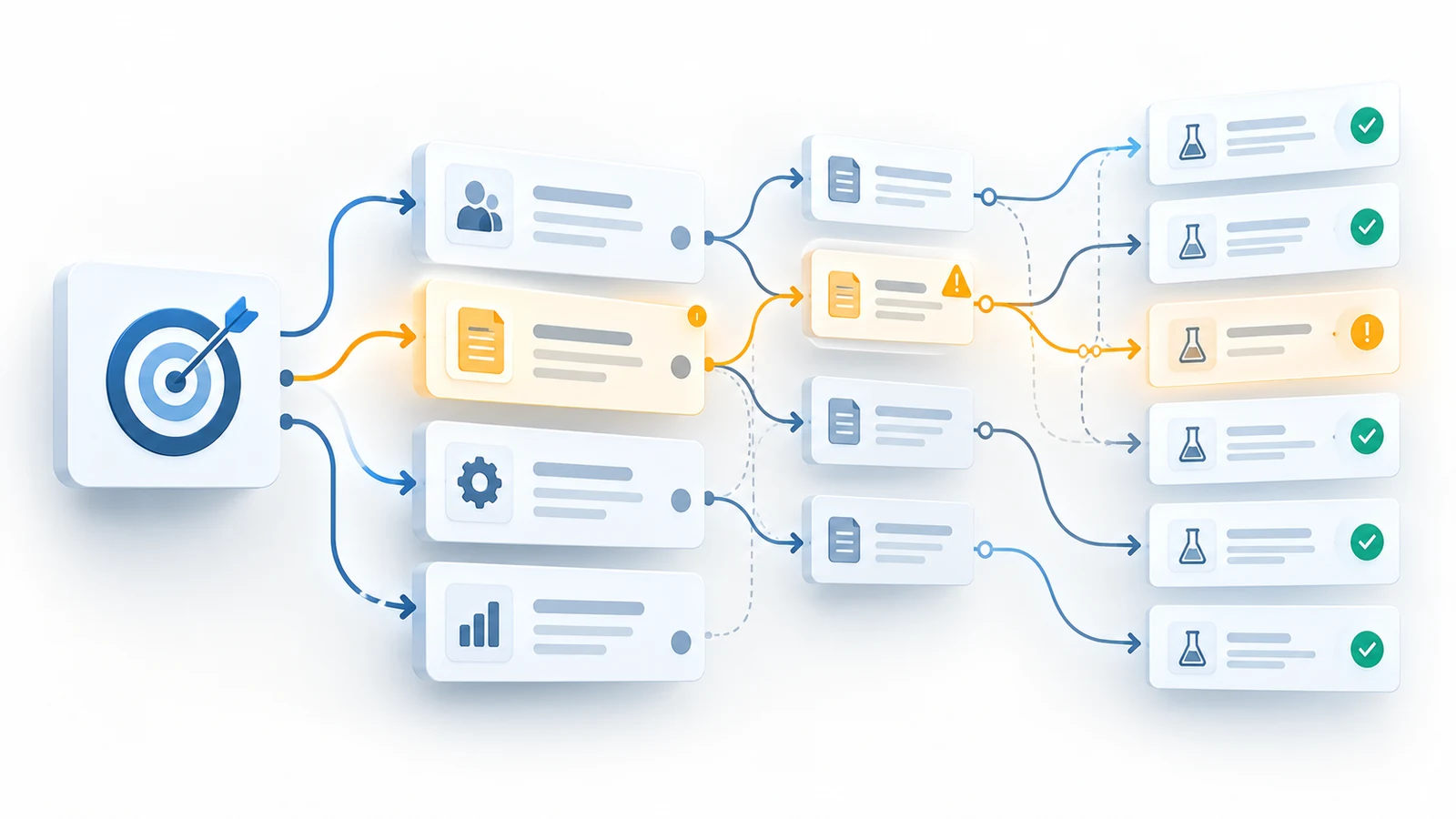
From Business Goal to Test Case: Building a Requirements Traceability Map
Acceptance criteria explain how to test behavior. Traceability also shows why a requirement exists, which tests protect it, and what changes when its business rule changes.
Read article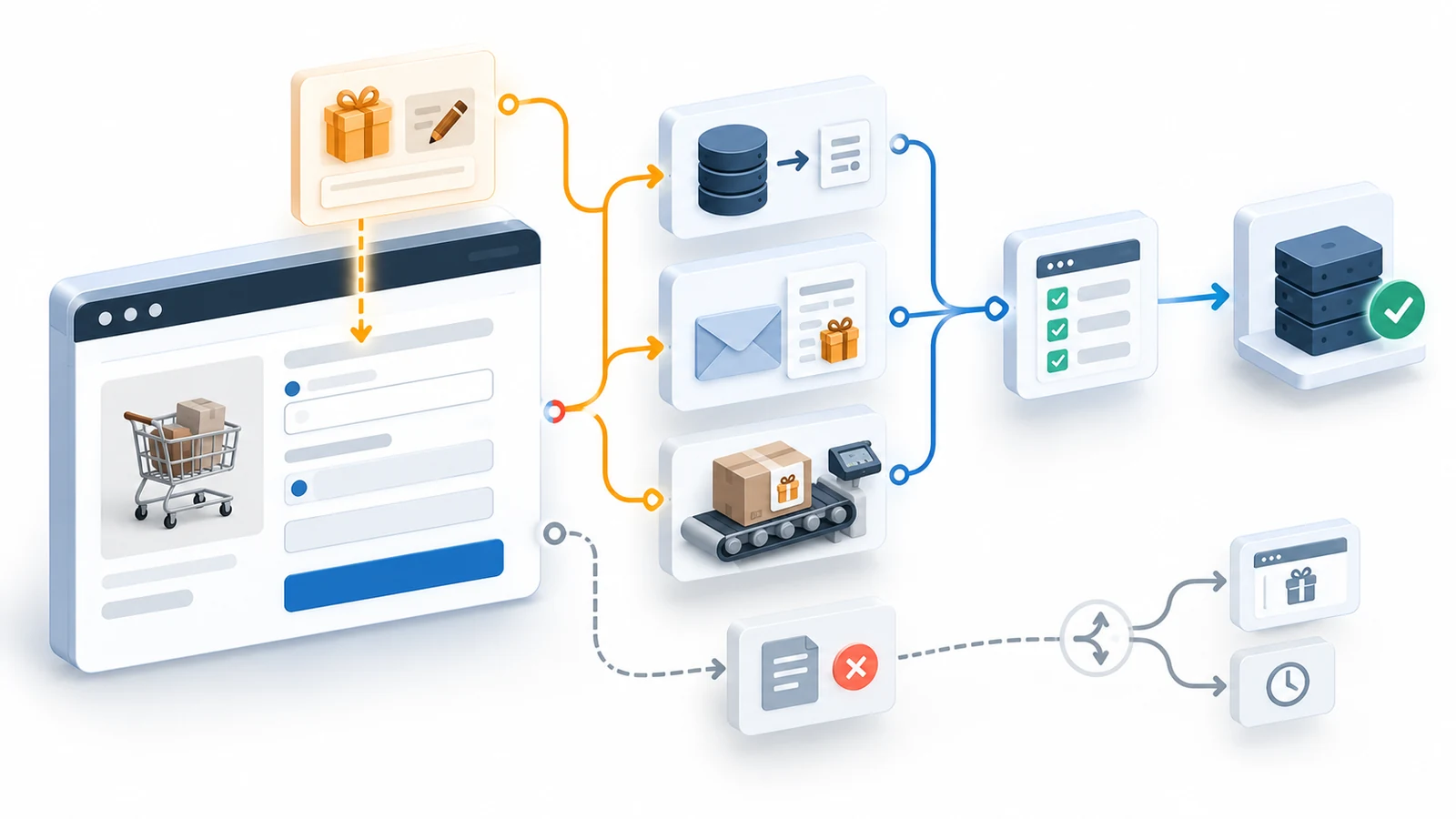
Scope Changes Are Decision Changes: Managing Late Requirements
A small gift-message request can affect a whole checkout release. This article shows how to distinguish late clarification from new scope and make the trade-offs explicit.
Read article