From Business Goal to Test Case: Building a Requirements Traceability Map
Acceptance criteria explain how to test behavior. Traceability also shows why a requirement exists, which tests protect it, and what changes when its business rule changes.
On this page
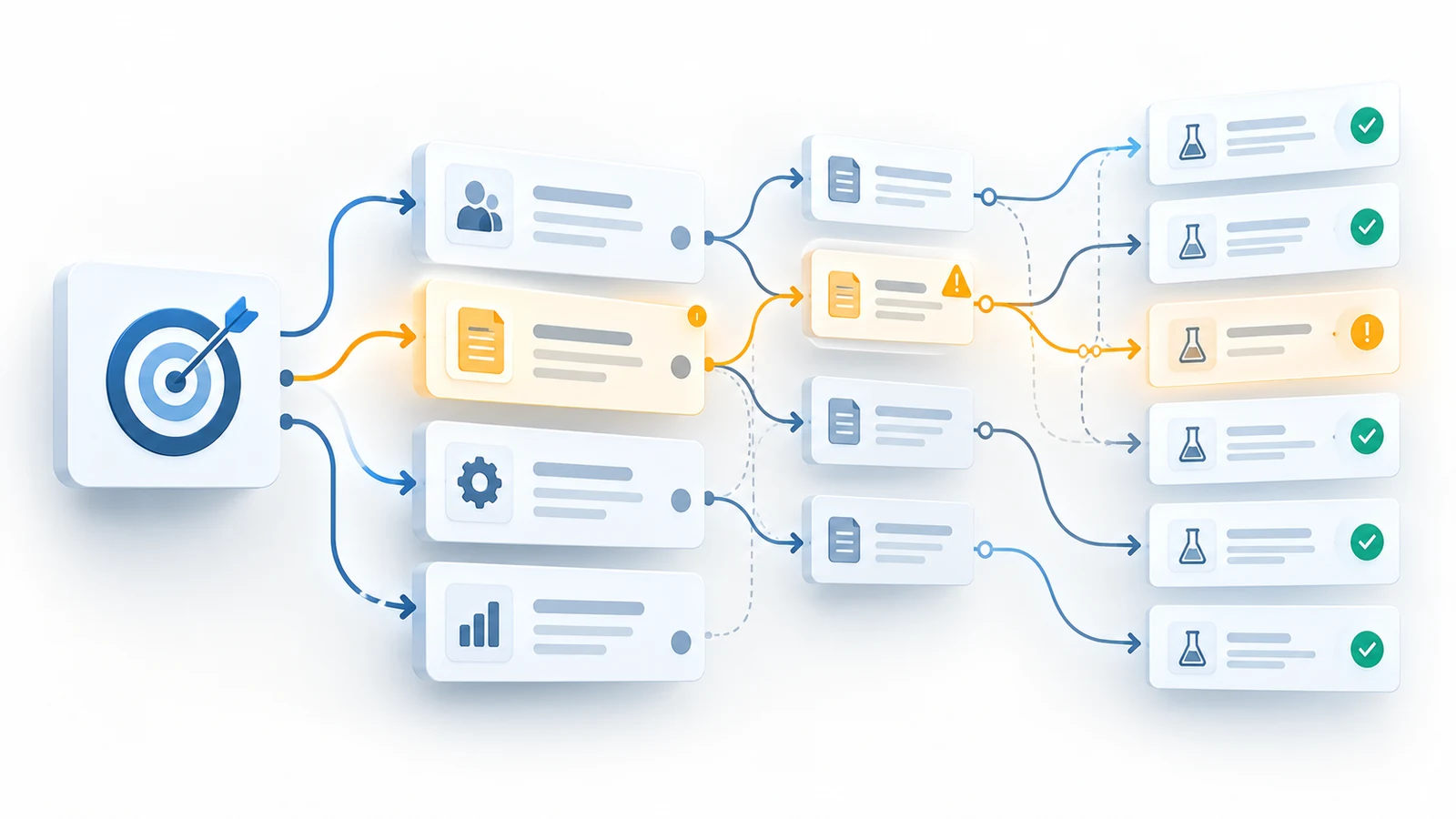
A business wants to reduce avoidable support enquiries about product returns. A reasonable proposal is to let customers check whether a purchased item is eligible for return directly from their order history. The interface seems straightforward: an item, a status, and perhaps an explanation.
But the business goal, the product rule, the interface, and a successful test are four different things. A page can correctly display “Eligible” under one test condition while giving the wrong answer for a different order, an excluded product, or a customer whose purchase data has not loaded.
Even if every acceptance test passes, the company may not see fewer support enquiries. A technically correct checker can be hard to find, difficult to understand, or irrelevant to why customers contact support in the first place.
This is the reason to trace requirements beyond the ticket. The illustrative return-eligibility scenario below is not a client implementation or a measured outcome from my work. It is a practical example of how I would connect business intent to product decisions, engineering boundaries, verification, and subsequent changes.
Traceability is about relationships, not filling in columns
A requirements traceability matrix links a requirement to the need it serves and to the design, implementation, or verification evidence associated with it. ISO/IEC/IEEE 29148 formally describes this kind of relationship; NASA’s software engineering guidance also explains how such links support test coverage and impact analysis.
That definition is useful, but the name can make the practice sound like a compliance spreadsheet. For a web product, I would start with a simpler question: if someone challenged a feature, could the team show why it exists, what behavior was agreed, where that behavior lives, and how it was checked?
If the answer requires reconstructing old meetings or guessing what a test name means, the team has lost some of the reasoning behind the work. Traceability preserves enough of that reasoning to make decisions repeatable.
It should not be confused with writing acceptance criteria. Acceptance examples make particular behavior testable. Traceability also asks whether those examples still serve the intended business need, whether meaningful behavior is missing, and which other artifacts must be reviewed when a decision changes.
Start with a goal that can be challenged
“Reduce return-related support contacts” is a business goal, not a technical requirement. The proposed checker is only one hypothesis about how to contribute to that goal.
Before approving its scope, a product owner might examine which questions drive support contact, whether customers can already find the return policy, and how often the answers depend on order-specific data. Those facts could strengthen the proposal or show that simpler content improvements deserve priority.
For the hypothetical feature, assume the business decides the checker is worth testing. Give the goal an identifiable reference, G-RET: help customers understand the return status of their purchased items without needing support for routine eligibility questions. That reference is an illustrative label, not a real issue ID.
The result is still a hypothesis. Verification that the software behaves correctly is not the same as demonstrating that it reduced support workload. The latter would require an appropriate baseline and post-release business evidence.
Before building a traceability map, the behavior itself needs to be clarified; Turning a Vague Feature Request into a Testable Requirement examines that earlier step.
Make the policy boundary explicit
An engineer cannot derive an authoritative return policy from a design mockup. The business must decide which time window applies, which item categories are excluded, whether order status matters, and which system is the source of truth for purchase and eligibility data.
For the example, assume the business authorizes a rule that an item is eligible only when the relevant policy window is open, its category permits returns, and the order record supplies the required information. This is illustrative policy, not advice about consumer law or the correct rules for any actual retailer.
The design can then choose how to explain the result. Engineering can decide how to request and present authoritative data. Testing can observe whether the same rule is applied in normal, excluded, borderline, and unavailable-data cases.
Without that separation, a developer might unintentionally implement a policy while solving a UI task, and another team might later interpret the same requirement differently.
Build the smallest map that preserves the decision
The map below is a worked example. Each row links an agreed behavior to its reason and to a meaningful check. Test references indicate intended evidence, not claims that these tests were implemented or passed.
| Requirement and rationale | Observable agreement | Proposed verification |
|---|---|---|
| R1: Specific purchased item | Eligibility uses the applicable policy and actual order record | T1: eligible purchase produces correct, explained status |
| R2: Policy exclusions | Excluded items never show an unsupported return promise | T2: excluded category gives correct reason |
| R3: Window boundary | Before/after the cut-off behaves according to authorized policy | T3: boundary conditions and regional date rules |
| R4: Unavailable order data | Unknown status is not silently treated as ineligible | T4: service failure offers honest recovery |
| R5: Understandable results | Status and error are readable and usable by keyboard | T5: keyboard and assisted-technology task |
| G-RET: Reduce avoidable contacts | Helpful checker is a business hypothesis, not an acceptance result | Monitor support contacts and usage against a credible baseline |
Several details matter. An eligibility result must be tied to a specific purchased item, not merely to a product catalog entry. An unknown or failed eligibility lookup must not be silently converted into “not eligible.” A customer needs a meaningful explanation, not just a color-coded badge.
One requirement may need multiple checks; a single end-to-end test may also exercise several requirements. The relationships do not have to be perfectly one-to-one. Their purpose is to expose coverage gaps and make the consequences of change easier to understand.
For example, a green test suite does not settle whether the excluded-category test was actually written. Conversely, a test for an obsolete policy may still pass while actively protecting behavior the business no longer intends.
Use changes to test whether the map is useful
Imagine the business later changes the return window for one region but not others. This is a hypothetical policy revision, not an existing company’s rule. A developer might be asked simply to update the displayed deadline.
The change reaches much further than text. Eligibility calculations may need regional context. A cached eligibility result may be stale. The explanation shown to the customer may differ. Boundary tests may need adjustment. Analytics that distinguish eligible from ineligible outcomes may need to preserve their historical meaning.
This is where traceability earns its maintenance cost. Instead of searching the entire application from memory, the team can follow the links from the policy decision to affected data, interface behavior, tests, and release evidence.
| Affected link | Potential consequence of region-specific policy change | Check before release |
|---|---|---|
| Policy decision | Return window and eligible regions require authorization | Which policy and effective date is approved? |
| Eligibility data | Backend may need region, purchase timestamp, and status | Can authoritative system resolve the right rule? |
| Customer explanation | Copy, deadline, and result details may change | Is the displayed promise correct for the order? |
| Cached status | Old eligibility might remain visible after rule change | What invalidation or freshness rule applies? |
| Acceptance tests | Boundary, exception, and region variants need revision | Do tests assert the new rule, not an obsolete one? |
| Outcome monitoring | Support and event interpretation may change over time | Can reports distinguish old and new policy cohorts? |
The table is a review scope, not a mandatory rewrite list. If eligibility is always calculated by an authoritative backend service, a frontend code change might be unnecessary. If regional policy is already represented in the data contract, the work may be focused on configuration and verification. The map makes those alternatives visible.
It also makes ownership clearer. Policy changes require an authorized business decision. Technical changes require evidence about system boundaries. Acceptance requires confidence that the intended customer outcome has not been contradicted by the release.
Trace backward when a test fails—or succeeds unexpectedly
Forward traceability asks which tests and implementation areas correspond to a requirement. Backward traceability asks why a piece of behavior or a test exists in the first place.
Suppose someone finds a test that always labels a restricted item ineligible. Is that still a requirement? Did the restriction change? Was the test written against an assumption that nobody approved? Without a path back to the policy decision, the team may maintain the test simply because it has always been there.
The same reasoning applies to proposed features. A request to add another confirmation email could be valuable, but it should not enter scope merely because a developer finds it easy. Which business outcome would it support? Is it legally or operationally required? What failure would its test prevent? If those answers are absent, the new work needs a decision, not an automatic ticket.
Bidirectional traceability is therefore more than documenting coverage. It helps identify implementation without a current rationale, tests without a current requirement, and requirements without meaningful verification. NASA’s traceability guidance makes a similar distinction in its software-assurance context.
Do not mistake a passing test for a proven business result
An end-to-end test can establish that, in a controlled scenario, a customer sees the expected return status and can act on it. It cannot establish that customers found the feature independently, understood the explanation without assistance, or contacted support less frequently.
Those require different evidence. The business may examine the distribution of return-related enquiries before and after release, observe how people reach and use the checker, or evaluate the clarity of its language with representative users. Those comparisons need to account for campaign activity, policy changes, order volume, and other factors that can affect contact counts.
The traceability map can identify the desired business measure, but it should label it as outcome monitoring rather than presenting it as a software test. This keeps engineering verification honest while giving the business a reason to revisit the original hypothesis.
Keep the traceability light enough to survive real work
A large spreadsheet with dozens of fields is not inherently more reliable than a few well-maintained links. Its value disappears when nobody updates it after the first release.
For routine, low-risk changes, a short chain from business decision to behavioral requirement and acceptance example may be enough. For work involving several services, regulatory constraints, shared components, or high-consequence failures, it can be worth linking the data contract, affected consumers, verification artifacts, and release evidence.
I would keep references stable, link to existing artifacts rather than duplicating their content, and update the links when the decision actually changes. The point is not to create an independent documentation system that competes with the backlog and tests. It is to preserve the connections between them.
A test case should be able to explain its existence
The best traceability question is simple: if this test failed tomorrow, could the team explain which customer or business promise is at risk? And if the associated policy changed, would the team know which tests and behaviors must be reconsidered?
When those answers are clear, traceability becomes a tool for engineering judgment. It helps a team distinguish what it agreed to build, what it has demonstrated, and what it still needs to learn about the business outcome.
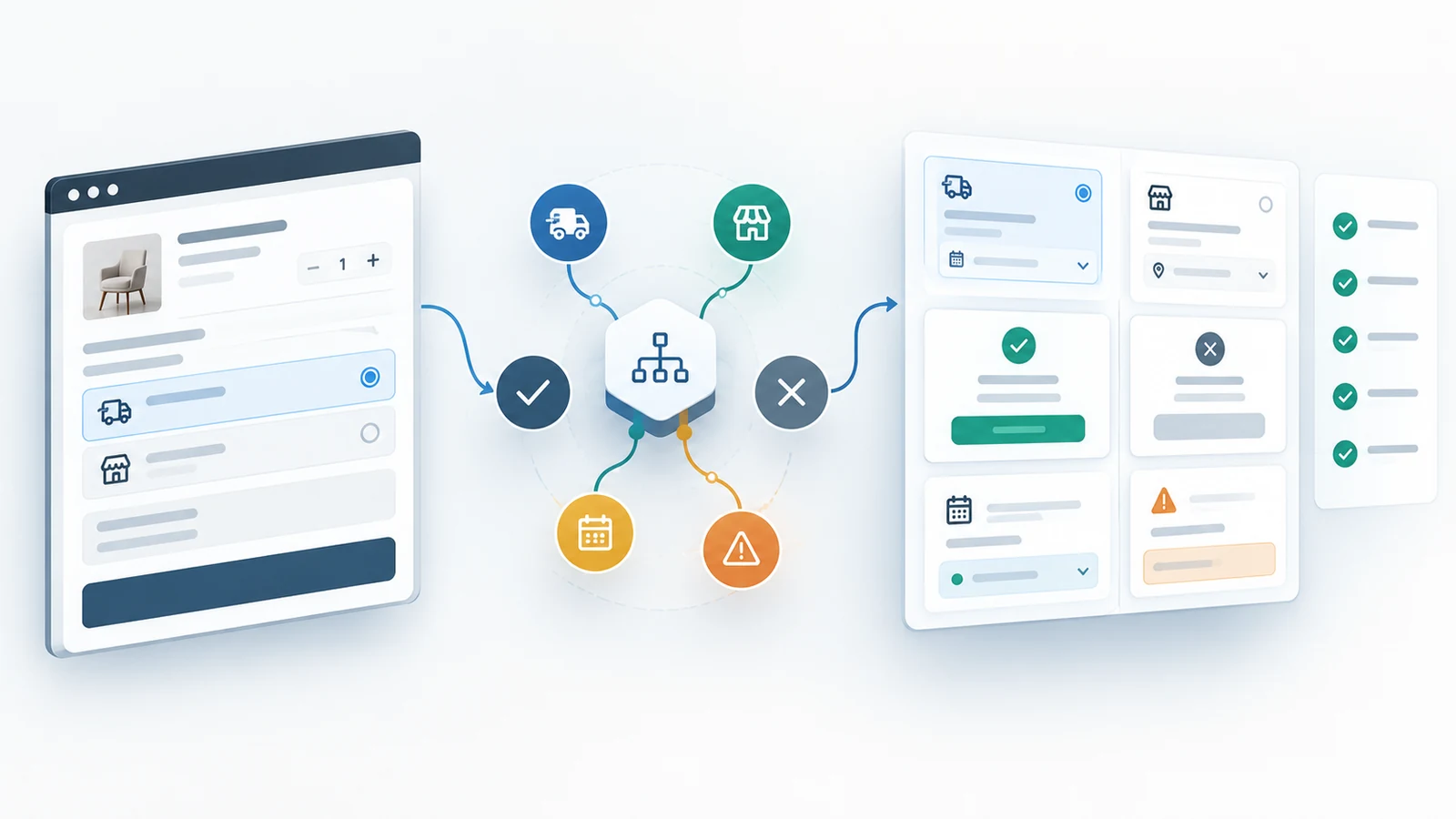
Turning a Vague Feature Request into a Testable Requirement
What does “let users change a delivery option” really mean? A practical look at the decisions hidden inside feature requests—and how to make those decisions testable.
Read article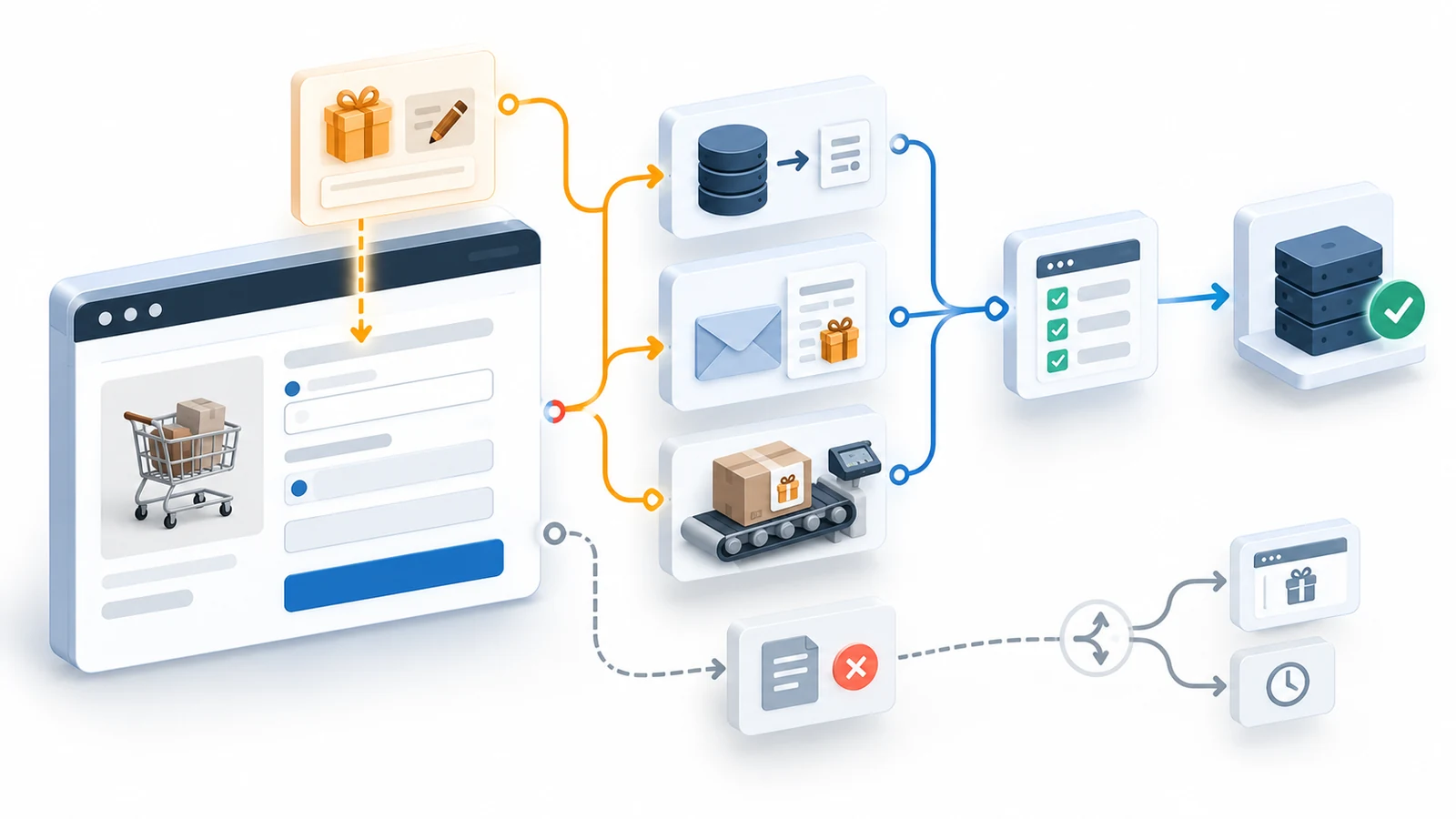
Scope Changes Are Decision Changes: Managing Late Requirements
A small gift-message request can affect a whole checkout release. This article shows how to distinguish late clarification from new scope and make the trade-offs explicit.
Read article