Scope Changes Are Decision Changes: Managing Late Requirements
A small gift-message request can affect a whole checkout release. This article shows how to distinguish late clarification from new scope and make the trade-offs explicit.
On this page
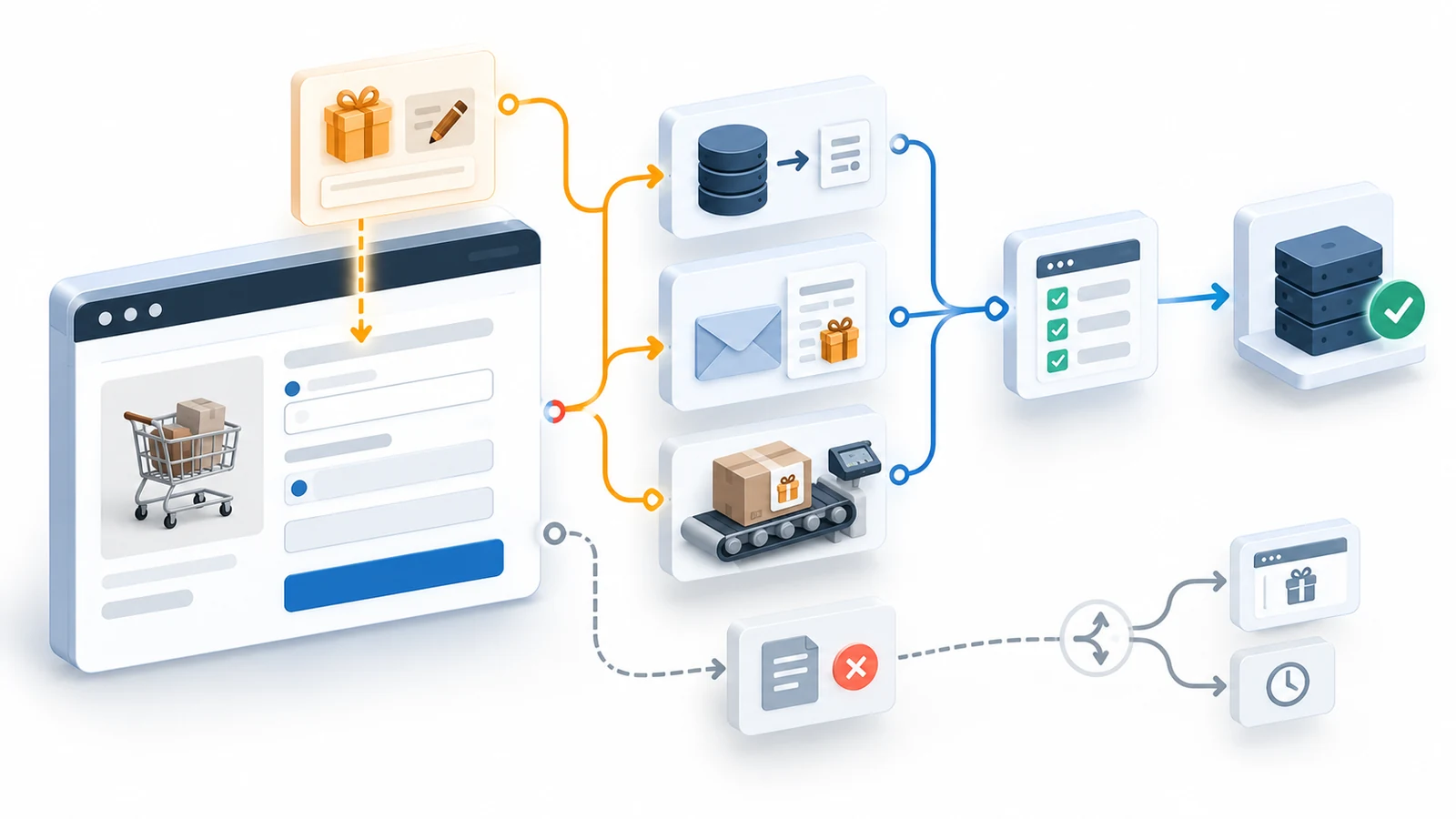
A checkout redesign is approaching release when someone asks for a gift-message field. The request sounds small: add a text area, save the message with the order, and show it on the confirmation page. The business wants the option available for an upcoming campaign.
The frontend change might indeed be contained. But if customers expect their message to arrive with the package, the work has already crossed into order storage, confirmation, and fulfillment. A perfectly implemented text field is not a working gift-message feature if the warehouse never receives the message.
This is where a late requirement becomes a decision, not merely another ticket. To accept it responsibly, the team must revisit what it intends to deliver, what it can verify, and what has to move to make room.
The checkout scenario in this article is hypothetical. It is not a client request I handled, a production incident, or a claim about a particular e-commerce implementation. My experience with established frontend systems is the context for the question: how should engineers respond when new product information arrives after important delivery decisions have already been made?
A late request is not automatically a bad request
Product teams learn during development. A customer need can become clearer after a prototype, a regulatory constraint may be discovered, or a commercial opportunity may appear after initial planning. A process that refuses every new requirement simply because it arrived late can produce an on-time release that solves the wrong problem.
The Agile Manifesto explicitly welcomes changing requirements, even late in development. That principle is not a promise that change has no cost. It is an argument for adapting when new information makes a different product decision more valuable.
The useful question is not “Who allowed this request so late?” It is “What does accepting it change about the plan, and is that trade-off preferable to the alternatives?” The answer may be yes. But it should be a conscious yes, with consequences understood.
First determine whether the request really changes scope
Not every late conversation describes the same kind of work. An incomplete description of an already agreed behavior needs clarification. A confirmed failure to meet that behavior needs correction. A genuinely new capability requires a product decision about whether it belongs in the current release.
For example, if gift messages were already part of the approved checkout behavior but no one had defined their maximum length, settling that limit clarifies an existing requirement. If accepted gift messages are being discarded despite an agreed promise to deliver them, that is a defect. If gift messaging was never in scope, adding it now changes what the release offers.
These categories can overlap. A late clarification may reveal additional work, and an apparently new feature may expose a previously misunderstood goal. The classification is not a way to reject responsibility. It prevents the team from treating a new business promise as if it were free bug fixing—or dismissing a genuine defect as optional scope creep.
Follow the new promise through the whole system
The gift-message example becomes clearer when described from the customer’s perspective: “I can add a message to an eligible order, and the recipient will receive that message as part of fulfillment.” That is a product promise. Its implementation spans more than the control that collects the text.
Before attaching a delivery date, I would identify the boundaries affected by that promise and the evidence needed to show each one works. The following map describes questions for the hypothetical feature; it does not claim that any integration is already present.
| Affected boundary | Decision the new feature requires | Evidence before exposure |
|---|---|---|
| Checkout interaction | Which orders show the field, and how can a shopper edit or clear it? | Keyboard and mobile task; validation and error feedback |
| Eligibility | Which items, carriers or split shipments can actually carry a note? | Supported and unsupported order scenarios verified |
| Saved order | What data contract persists the accepted text across checkout changes? | Confirmed order record preserves the right message |
| Buyer confirmation | Should the message appear in order summary or confirmation? | Displayed message matches the accepted order state |
| Fulfillment | Which partner or packing process delivers the message to the recipient? | Representative downstream receipt or fulfillment test |
| Failed update | What if storage or fulfillment cannot accept the request? | No false confirmation; clear recovery or exclusion |
This map exposes an important choice. If the order system can store a message but the fulfillment partner cannot deliver it, the team has not implemented a narrower version of the same promise. It has implemented a different behavior. Whether that behavior is worth releasing is a business decision that needs honest customer-facing wording.
The same applies to mixed carts or orders fulfilled through more than one channel. Perhaps only certain shipments support printed messages. That does not automatically make the feature impossible, but it means eligibility and explanation are part of the scope, not details to solve after launch.
The cost of changing scope depends on what is already settled
Two requests with the same visible UI can have different consequences depending on when they arrive. Earlier in discovery, the team may still be selecting a data model and defining order behavior. Near release, the checkout contract may already have been integrated, accepted, translated, and regression-tested.
At that stage, changing a field can reopen decisions beyond implementation: whether APIs need updating, which systems own the data, what the order summary must show, whether release testing must be repeated, and who can verify the final fulfillment step.
This is not a universal argument that late changes are expensive. A configuration correction within a supported workflow may be easy and low risk. The important variable is the number and consequence of assumptions the change invalidates, not the time at which someone noticed the idea.
An engineer can explain that impact without pretending to know the final effort immediately. If the fulfillment contract is unknown, the appropriate first estimate may be a short investigation. If the contract already supports the message, the team can size a concrete end-to-end implementation rather than an imagined one.
Changing scope is compatible with protecting the Sprint Goal
The 2020 Scrum Guide is more nuanced than the claim that nothing can change during a Sprint. It says that no changes should endanger the Sprint Goal, quality does not decrease, and scope may be clarified and renegotiated with the Product Owner as more is learned.
That does not give the Product Owner a technical guarantee that any added item fits. Nor does it allow Developers to ignore a new business priority. It creates a conversation: what outcome are we trying to achieve in this Sprint, what capacity and dependencies remain, and what scope can support that goal without pretending verification is optional?
A late gift-message request might support an important commercial objective but still be separable from the current checkout goal. In that case, moving it to a later increment can protect both outcomes. Alternatively, if the new capability is central enough that the old goal no longer makes sense, the product direction and delivery commitments need explicit reconsideration—not a hidden expansion of the same promise.
The same reasoning applies without Scrum. A fixed release date, a campaign launch, and an agreed acceptance standard are constraints to discuss together. They should not silently become an instruction to compress testing or rely on unverified integration behavior.
Every acceptance option should identify its trade-off
“We can fit it in” is not a complete answer unless everyone understands what fitting it in means. Is another feature being removed? Is the customer-facing promise narrower? Is the launch date changing? Or is the team proposing to deploy dormant code while delaying activation?
The following options are not ordered from best to worst. Their suitability depends on the actual business value, implementation evidence, and authority to change an existing commitment.
| Decision option | When it can be justified | What must be explicitly agreed |
|---|---|---|
| Accept now, displace other work | End-to-end path is known and can be verified in remaining time | Product owner chooses work to remove; checks stay intact |
| Narrow complete release | Only some order types have proven fulfillment support | Business approves limited eligibility and clear wording |
| Release behind a flag | Disabled and enabled paths are safe, tested and operable | Activation owner, monitoring, removal and test cost |
| Defer to next release | Current goal is intact; integrations or tests remain uncertain | Marketing and product adjust customer promises and timing |
| Replan current release | New capability is essential enough to change the goal | Authorized change to date, dependencies and commitments |
Removing one backlog item does not automatically fund another of apparently similar size. The work may need different specialists, environments, or partner approvals. And an intentionally smaller feature is useful only if it is independently complete for the customers who are allowed to use it.
Delivery trade-offs become easier to assess when estimates are kept separate from available capacity, a distinction explored in Capacity Is Not a Commitment: Planning Software Work Under Uncertainty.
A feature flag can move exposure, not erase unfinished work
It may be tempting to implement the text field behind a release flag and declare the scheduling problem solved. A flag can separate deploying code from exposing behavior. It cannot make a missing order contract, untested fulfillment integration, or false customer promise safe.
Pete Hodgson’s detailed discussion of feature toggles distinguishes short-lived release toggles from other kinds of flags and explains their testing and maintenance costs. A disabled interface does not guarantee that the dormant code has no effect on shared services, data, or older pages.
For our example, the off state should preserve the existing checkout, and the on state needs the complete order-to-fulfillment journey verified. The team also needs someone responsible for activation, monitoring, and eventual flag removal. Otherwise the shortcut becomes a second behavior that nobody fully owns.
When the missing dependency is outside the team’s control, deferring the capability may be clearer than hiding an unfinished promise behind a toggle.
Make the decision visible in the work item
The record does not need to become a long change-control document. For a consequential late request, I would want one short explanation that survives the meeting: why the request matters now, what new behavior is being promised, which current commitments it affects, what options were considered, and who approved the choice.
For example, an illustrative decision note could read:
Request: Add gift messages for eligible checkout orders before the campaign. Current finding: checkout capture appears feasible, but fulfillment delivery and mixed-shipment handling are not yet verified. Decision: keep the current release scope while the integration owner confirms support. Reconsider inclusion if an end-to-end path can be tested and the product owner explicitly chooses what existing work to displace. Do not expose gift messaging until the recipient-delivery promise is verifiable.
That note is not a rejection of the idea. It records a conditional decision and the evidence that would change it. It also makes the ownership boundary visible: engineers investigate system behavior; product leadership decides the relative business value; the responsible integration and fulfillment parties confirm what can actually be delivered.
Without that record, a team may agree to “add the field” while different people assume different outcomes. The mismatch tends to appear later, when a demo looks finished but the operational workflow does not support what stakeholders expected.
Update verification when the promise changes
Accepting a late requirement means updating more than the implementation ticket. A previously approved checkout test may still pass while the new gift-message path has never been exercised. Testing only the field’s visibility or character limit is insufficient if the promised outcome depends on order persistence and fulfillment.
Verification should follow an eligible order from entering the message to confirmed storage, buyer-facing confirmation, and the receiving fulfillment system. It should also cover unsupported orders, cancellation or editing, failed submission, and accessible feedback where the new control affects the checkout task.
When the same release also supports existing checkout variants, the team should verify that turning the feature off or leaving a legacy path unchanged does not alter critical order behavior. Testing has to match the states that could actually reach production, not only the newest demonstration path.
A successful test in staging is evidence about those conditions, not a guarantee of every downstream outcome. If a critical external step cannot be observed or tested, that limitation belongs in the decision before the feature is exposed, not in an explanation after customers start using it.
A responsible “not yet” preserves room for a better yes
Late requirements are not inherently signs of poor planning. Sometimes they reflect learning that makes a product more valuable. The mistake is to accept their value while pretending they do not change existing constraints.
An experienced engineer should be able to show the difference between a visual addition and a complete customer promise, explain what needs re-verification, and give decision-makers credible alternatives. Those alternatives may include accepting the feature now with an explicit trade, narrowing it to a genuinely complete supported case, or moving it to a later release.
The strength of a delivery process is not measured by how rarely its scope changes. It is measured by whether the team can make those changes without losing clarity about what was promised, what was tested, and who accepted the consequences.
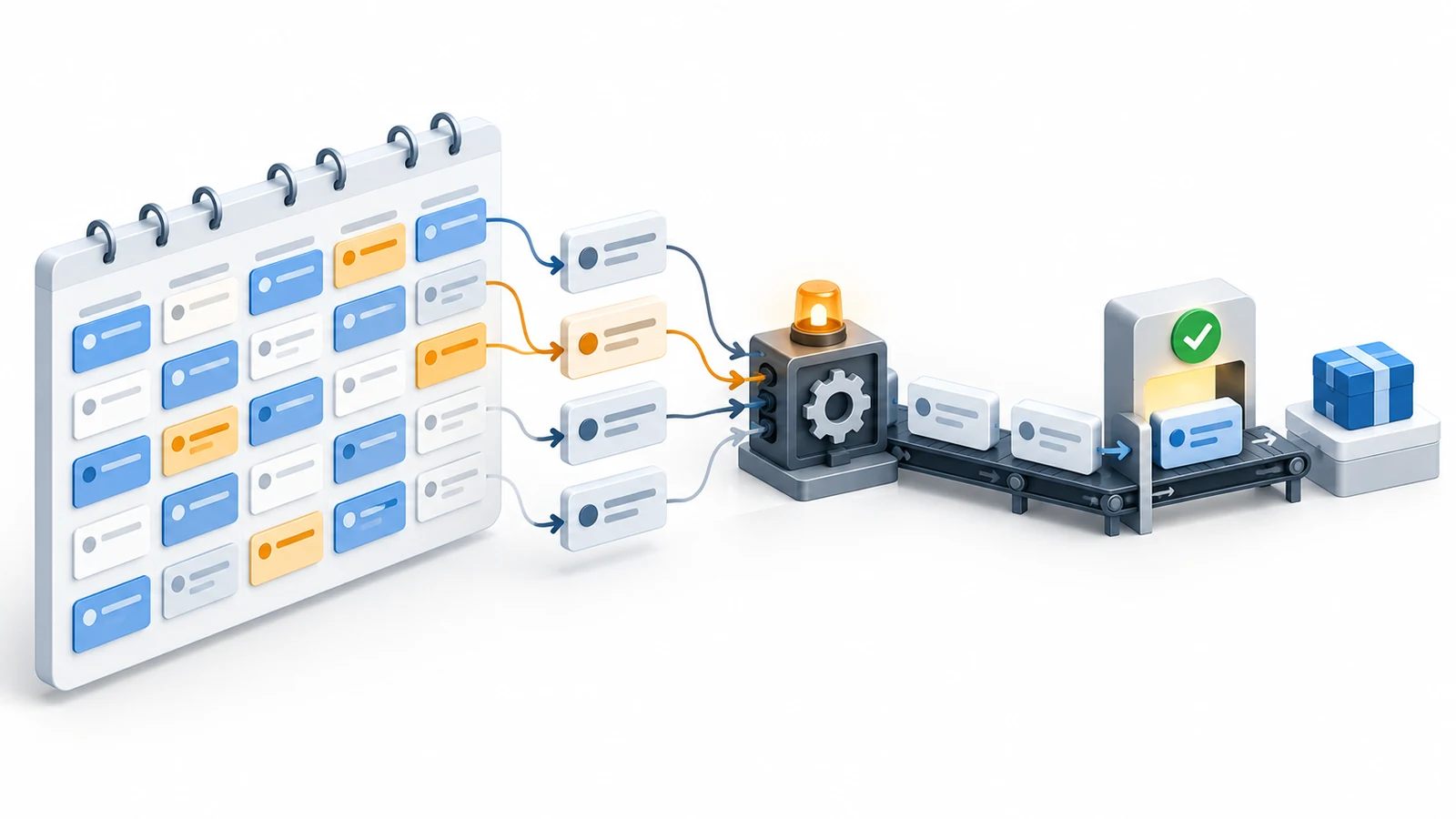
Capacity Is Not a Commitment: Planning Software Work Under Uncertainty
A team can have sufficient capacity on paper and still lack a credible route to Done. A worked example shows how to forecast under shared dependencies and changing constraints.
Read article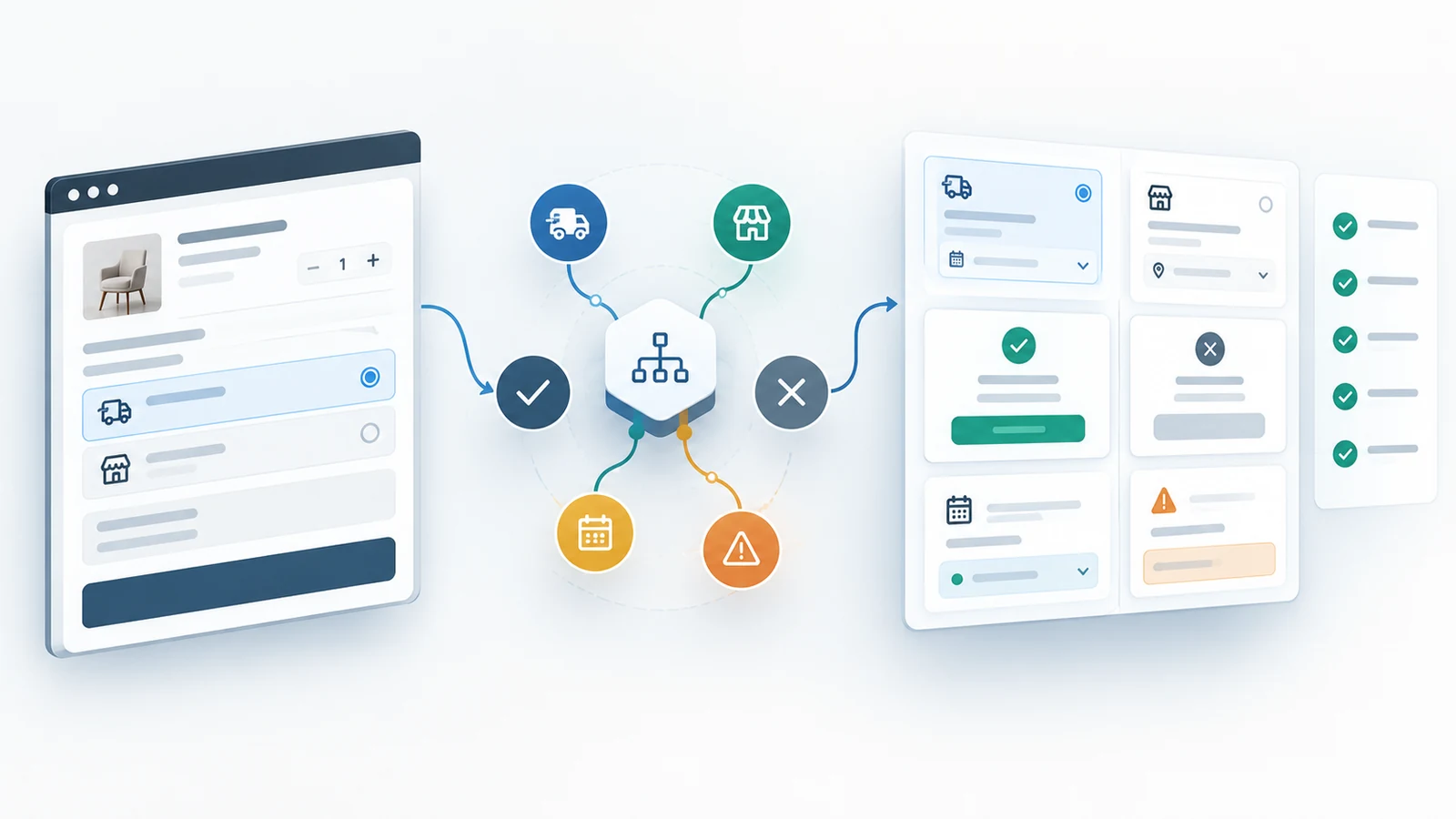
Turning a Vague Feature Request into a Testable Requirement
What does “let users change a delivery option” really mean? A practical look at the decisions hidden inside feature requests—and how to make those decisions testable.
Read article